


 +91-11-41255444
 info@holylandgroup.com
Blog
Thai Massaman Curry Paste: What It Is and How to Cook With It
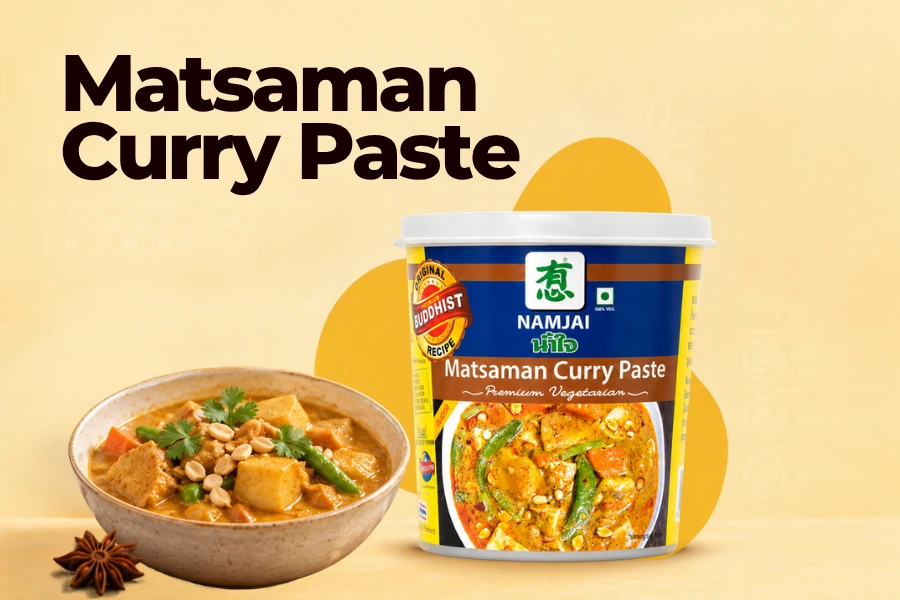
Thai Massaman Curry Paste: What It Is and How to Cook With It
The first spoonful of Massaman curry usually comes with a moment of confusion. It's rich, it's warm, there's a hit of cinnamon somewhere in there, maybe a whisper of cardamom — and most people's first reaction is some version of, "wait, is this actually Thai?" That confusion is the whole charm of it. Massaman is the curry that broke the rules of Thai cooking centuries ago, and it's still the easiest one for an Indian kitchen to fall in love with.
So What Exactly Is Massaman Curry Paste?
At its core, Massaman curry paste is a blend of dried red chillies, lemongrass, galangal, shallots, and garlic — the usual suspects in any Thai curry base. But then it takes a sharp left turn with cinnamon, cardamom, cumin, and cloves stirred into the mix, spices you'd expect to find in a Mughlai korma long before you'd expect them in Thai food. That's not an accident, and it's not a modern fusion twist either — it's history sitting quietly in a curry paste.
Why Does It Taste So Familiar to Indian Cooks?
The story goes that Massaman curry travelled into Thailand with Muslim traders from Persia and India, centuries before "fusion food" was a phrase anyone used. Even the name is thought to be a Thai pronunciation of "Musalman." Those traders brought their spice boxes with them, and somewhere along the way, warm Mughlai-style spices found their way into a Thai curry pot — and just never left. It's probably the only Thai curry where an Indian home cook takes one sniff and thinks, "I already know how to use this."
How It Stacks Up Against Thailand's Other Famous Curries
If red curry is the sharp, chilli-forward one and green curry is the hot, herbaceous one that clears your sinuses, Massaman is the quiet, patient cousin — mild, a little sweet, built around coconut milk and roasted peanuts instead of raw chilli heat. It's the curry you make when you want comfort food, not a spice challenge.
Turning a Tub of Paste Into Dinner
This is where Massaman earns its reputation as one of the easiest Thai curries to cook at home — most of the work has already been done for you inside that tub of paste. Start by sautéing two to three tablespoons of it in a tablespoon of hot oil for a minute or two, just until the kitchen starts smelling like something worth waiting for. Pour in a cup of coconut milk and let it simmer until the oil rises to the surface — that's the paste telling you it's ready for the next step.
Add your protein of choice — chicken, paneer, or tofu all work — and let it sear for a minute before adding cubed potatoes, a handful of roasted peanuts, and a second cup of coconut milk. Let it simmer gently for 15 to 20 minutes, until the potatoes give in and go soft. Right at the end, a pinch of sugar and a small splash of tamarind is what pulls the whole thing together into that signature sweet-tangy finish Massaman is known for.
A Few Ways to Make It Your Own
Once you've made it the traditional way, Massaman is forgiving enough to play with. Swap in paneer for a vegetarian version that holds its shape beautifully in the gravy. Try sweet potato instead of regular potato for a version that leans naturally sweeter. Thin it out with a bit of extra stock and you've basically made a Massaman soup. And if there's any left over the next day, it makes an unexpectedly good base for fried rice — few people will guess the secret ingredient.
What to Put Next to It on the Plate
Jasmine rice is the traditional pairing, but don't feel locked into it — Massaman's warm-spice personality means it sits just as comfortably next to plain basmati rice or even a soft roti, which is probably why it's become such an easy entry point for Indian households experimenting with Thai food. A simple cucumber salad or a few pickled vegetables on the side cuts nicely through the richness of the coconut milk.
A Quick Word on What's Actually in the Pot
A good Massaman paste, the kind without MSG or artificial colour, doesn't need much dressing up nutritionally — most of the dish's richness comes from coconut milk and peanuts, both sources of the kind of fat that doesn't need to feel like a guilty pleasure. It's a curry that manages to feel indulgent without leaning on cream or excess oil to get there.
Picking a Paste Worth Cooking With
Because Massaman paste is doing so much of the flavour work, the quality of the tub you start with matters more than in most recipes. The good ones show it — flecks of visible herbs and spice rather than a suspiciously smooth, uniform paste, and no artificial colour trying to compensate for a weak base. Maepranom, a Thai gourmet brand distributed in India by Holyland Group, has built a following in professional Thai kitchens for exactly this reason — naturally sourced ingredients that taste like someone actually cooked the paste, rather than manufactured it. It's increasingly finding its way into Indian home kitchens for the same reason.
Keeping It Fresh
An unopened tub is happy in a cool, dry pantry away from sunlight. Once it's open, move it to the fridge and try to use it within a few weeks — and always dip in with a clean, dry spoon, since a little stray moisture is often what turns a good paste mouldy before its time.
The Short Version
Massaman curry paste is one of the easiest ways to bring restaurant-style Thai food into an Indian kitchen, mostly because it doesn't ask you to unlearn anything about spice — it just asks for twenty minutes, a can of coconut milk, and whatever protein happens to be in the fridge.
A Few Quick Questions Answered
Is Massaman curry very spicy?
Not really — it's one of the mildest Thai curries around, with its warmth coming from spices like cinnamon and cardamom rather than chilli heat.
Can Massaman curry paste be used for vegetarian dishes?
It can, though most commercial pastes include shrimp paste as a base ingredient, so it's worth checking the label or looking for a plant-based version if you're cooking strictly vegetarian.
What can I use instead of coconut milk?
Honestly, not much comes close — coconut milk is doing too much of the work in both texture and sweetness. Light coconut milk is the closest swap if you want something a little lighter.
How long does opened curry paste last?
Refrigerated and tightly sealed, most Thai curry pastes hold their flavour for a few weeks to a couple of months.
Why does Massaman curry taste so different from other Thai curries?
Blame it on history — the warm, whole spices it borrowed from Persian and Indian traders centuries ago give it a completely different personality from the fresh-herb curries Thailand is better known for.
Featured Articles
North Indian
 Back