


 +91-11-41255444
 info@holylandgroup.com
Blog
Sriracha vs Thai Sweet Chilli Sauce
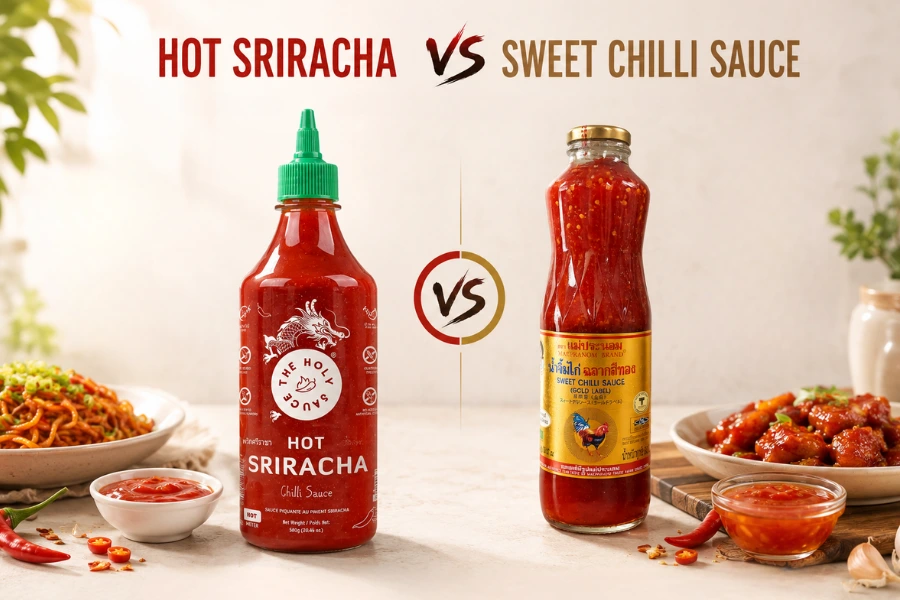
Sriracha vs Thai Sweet Chilli Sauce
Introduction — Choosing Between Sriracha and Thai Sweet Chilli Sauce
Ask a chef to reach for "the chilli sauce" and you'll usually get a follow-up question: which one? Sriracha and Thai sweet chilli sauce are both red and chilli-based, but they behave completely differently on the plate — one brings heat and tang, the other brings sweetness and glaze.
For restaurants, hotels, cafés and catering kitchens, knowing when to use each affects consistency, plating, and how a dish is perceived by the customer. Here's a practical breakdown of both.
What Is Sriracha Chilli Sauce?
Sriracha originates from Thailand, named after the coastal city of Si Racha, where it was first made. It's built from sun-ripened red chillies, garlic, vinegar, sugar and salt, blended into a smooth, pourable paste with a tangy, garlicky bite.
Genuine Thai sriracha typically sits in a medium-to-hot range, around 1,000–2,500 Scoville Heat Units — noticeably spicier than sweet chilli sauce, but not as searing as a pure chilli extract. The flavour leans savoury and garlic-forward rather than sweet, which is what makes it versatile as both a condiment and a cooking ingredient.
What Is Thai Sweet Chilli Sauce?
Thai sweet chilli sauce takes a different route — thicker and noticeably sweeter, built around red chilli, sugar, garlic and vinegar, with sweetness leading over heat. Traditional versions often use rice vinegar and mild chillies to strike a balance of sweet, tangy and gently spicy, rooted in Thai cuisine's broader habit of balancing sweet, sour, salty and savoury in a single sauce.
Because the heat is dialled down, sweet chilli sauce works well as a standalone dipping sauce without needing to be blended into other preparations.
Sriracha vs Thai Sweet Chilli Sauce: Key Differences
The easiest way to tell the two apart on a menu is by what each sauce is doing for the dish — Sriracha adds punch, sweet chilli sauce adds glaze.
|
Feature |
Sriracha Chilli Sauce |
Thai Sweet Chilli Sauce |
|
Flavour profile |
Garlicky, tangy and chilli-forward |
Sweet, tangy and chilli-based |
|
Sweetness |
Usually low compared with sweet chilli sauce |
Noticeably sweeter |
|
Heat |
Typically more pronounced |
Usually milder, depending on formulation |
|
Typical use |
Noodles, burgers, marinades, dips and sauces |
Dipping, glazing, appetisers, marinades and Asian-inspired dishes |
When Should You Use Sriracha?
Sriracha earns its place wherever a dish needs a sharp, garlicky kick without added sweetness — stirred into noodle broths, drizzled over burgers and fried eggs, blended into mayo-based dips, or used as a base for spicy marinades on grilled meats and seafood. Because it's savoury rather than sweet, it layers well into other sauces without throwing off the flavour balance.
When Should You Use Thai Sweet Chilli Sauce?
Sweet chilli sauce is the go-to when a dish calls for a sticky, glossy finish or a dip that pairs sweetness with gentle heat. It's the standard accompaniment for spring rolls, dumplings and fried appetisers, and doubles as a glaze for grilled chicken, prawns and vegetables where a caramelised, slightly spicy coating is the goal.
Sriracha and Sweet Chilli Sauce in Foodservice
In commercial kitchens, both sauces tend to serve different stations. Sriracha shows up on the line — folded into sauces, marinades and dressings where a chef controls exactly how much heat reaches the plate. Sweet chilli sauce is often served as-is: portioned into dip cups for appetisers or used as a finishing glaze that needs no further seasoning.
Restaurants, hotels, cafés and catering operations running Pan-Asian or fusion menus commonly stock both, since a single appetiser section might need sweet chilli sauce for spring rolls and Sriracha for a spicy wing sauce on the same menu. Consistency matters too — a sauce that varies in heat or sweetness from batch to batch makes it hard to standardise a recipe across outlets or shifts.
How to Choose the Right Chilli Sauce
A few practical questions help settle which sauce fits a dish or menu:
- Does the dish need heat or sweetness to lead? Sriracha for heat, sweet chilli sauce for a sweet-forward glaze.
- Standalone dip or cooking ingredient? Sweet chilli sauce works straight from the bottle; Sriracha is often blended into other preparations.
- What's the flavour direction? Garlicky, tangy dishes suit Sriracha; sticky, caramelised dishes suit sweet chilli sauce.
- What consistency does the kitchen need? Both should hold texture and flavour reliably across large batch sizes for high-volume service.
Conclusion
Sriracha and Thai sweet chilli sauce aren't rivals — they're tools built for different jobs. Sriracha brings tangy, garlicky heat suited to cooking and dressing; sweet chilli sauce brings a sweet, glossy balance suited to dipping and glazing. Most Asian-inspired menus need both, used with intention rather than interchangeably.
For kitchens looking to standardise on consistent, foodservice-grade chilli sauces, Holyland's Sauce range — developed through a collaboration between global flavour house Nippon Kiz and Holyland Marketing — includes both Sriracha and sweet chilli formulations built for reliability across high-volume kitchens.
FAQs
What is the difference between Sriracha and Thai sweet chilli sauce?
Sriracha is tangier and spicier with a garlic-forward flavour and low sweetness. Sweet chilli sauce is thicker and noticeably sweeter, with heat playing a supporting role.
Is Sriracha hotter than Thai sweet chilli sauce?
Yes, generally. Sriracha typically falls in the 1,000–2,500 Scoville Heat Unit range, while sweet chilli sauce is formulated to be milder and sweetness-led.
What is Sriracha chilli sauce used for?
Noodles, burgers, marinades, dips, and as a cooking ingredient blended into other sauces for heat and tang.
What is Thai sweet chilli sauce used for?
Dipping sauces for spring rolls and appetisers, glazes for grilled meats and vegetables, and dishes needing a sweet-spicy finish.
Can restaurants use both sauces on the same menu?
Yes, and many do — Sriracha for spicier, cooked applications and sweet chilli sauce for dips and glazes, often on the same menu.
Which chilli sauce is better for foodservice?
Neither is universally better — it depends on whether a dish needs heat-forward flavour (Sriracha) or a sweet, glossy finish (sweet chilli sauce)
Featured Articles
North Indian
 Back
Back