


 +91-11-41255444
 info@holylandgroup.com
Blog
Pitted Black Olives vs Pitted Green Olives: What They Are and Where to Use Them
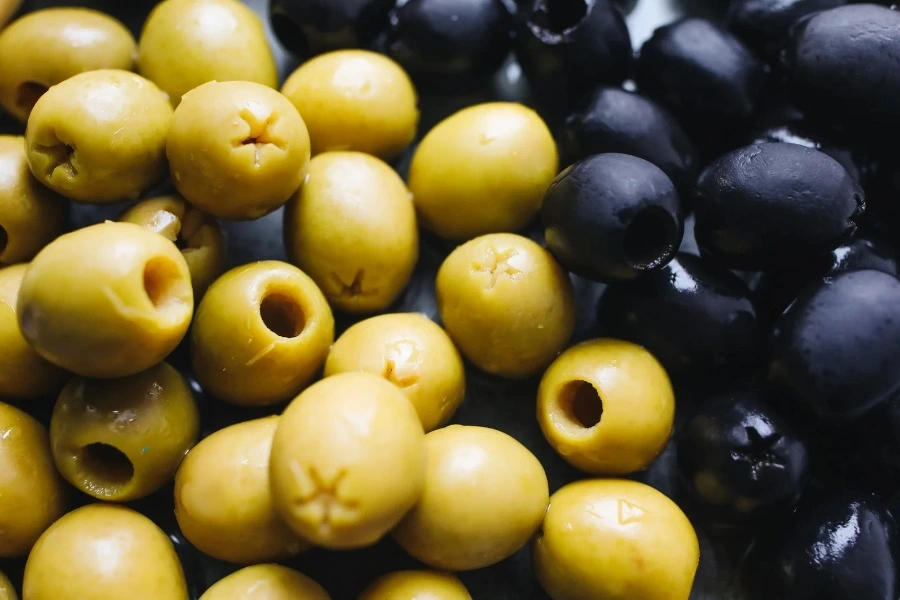
Pitted Black Olives vs Pitted Green Olives
Olives show up on pizzas, in salads, on sandwiches and in pasta, and menus often list them simply as "black olives" or "green olives". For a kitchen buyer the choice matters: the two taste different, behave differently in cooking and suit different dishes. Pitted olives also save prep time because the stone is already removed.
This guide explains what pitted black and green olives are, how they differ, and where each one works best.
What Are Pitted Olives?
Pitted olives are whole olives from which the stone (pit) has been removed, usually leaving a small hole where it was. They are typically sold in brine in cans or jars. Because there is no stone, they are ready to slice, chop, toss or top onto food straight from the pack, which is why pizzerias, sandwich counters and caterers prefer them.
Green Olives vs Black Olives: What Is the Real Difference?
The main difference is ripeness at harvest and how the olives are cured. Green olives are picked before they are fully ripe. Black olives are picked riper, or in many commercial cases are processed so they develop a dark, even colour. Both start from the same fruit; the stage of ripeness and the curing method shape colour, flavour and texture.
Pitted Black vs Green Olives at a Glance
|
Feature |
Pitted green olives |
Pitted black olives |
|
Ripeness |
Picked before full ripeness |
Picked riper, or processed to a dark colour |
|
Colour |
Green to yellow-green |
Dark brown to black |
|
Taste |
Tangy, briny, slightly bitter |
Milder, softer, less sharp |
|
Texture |
Firm, meaty bite |
Softer |
|
Best for |
Salads, antipasti, martini-style garnishes, sandwiches |
Pizza, pasta, tacos, burgers, wraps |
|
Cooked or raw |
Great raw, holds up in cooking |
Great baked or cooked, also fine raw |
|
Common formats |
Whole pitted, sliced, stuffed |
Whole pitted, sliced |
Taste and Texture
Green olives have a sharper, more salty-tangy flavour and a firm bite, so they stand out in a dish. Black olives are milder and softer, so they blend in and add a gentle savoury depth without dominating. If a guest says olives are "too strong", black olives are usually the safer choice; if you want olives to be noticed, go green.
Where to Use Pitted Green Olives
- Salads: Greek salad, pasta salad, grain bowls and antipasti platters.
- Sandwiches and subs: sliced green olives add a salty, tangy bite.
- Pizza and focaccia: a good partner for feta, mushrooms and herbs.
- Garnish and bar use: a classic for martinis and cocktail snacks.
- Dips and spreads: chopped into tapenade-style spreads, cream cheese dips and hummus toppings.
- Mediterranean mains: cooked into chicken, fish or vegetable dishes where a briny note is wanted.
Where to Use Pitted Black Olives
- Pizza: the most common use, alongside onions, capsicum and jalapeños.
- Pasta and baked dishes: lasagne, baked pasta, gratins and tomato-based sauces.
- Mexican and Tex-Mex: tacos, nachos, burritos, quesadillas and loaded fries.
- Burgers, wraps and sandwiches: sliced rings add colour and a mild savoury taste.
- Salads and bowls: for a softer, milder olive flavour.
- Garnish: the dark colour makes dishes look more finished.
Which One Should Your Kitchen Choose?
- Choose green when you want a bold, briny, tangy olive that stays firm.
- Choose black when you want a milder olive that blends into baked and cheesy dishes.
- Many kitchens stock both: black for pizza and pasta, green for salads and platters.
- Choose sliced for speed on pizza and sandwich lines, and whole pitted when appearance matters on a plate.
Storage and Handling Tips
- Follow the storage instructions printed on the pack.
- Once opened, transfer unused olives with their brine to a clean, covered container and refrigerate, unless the label says otherwise.
- Keep them submerged in brine and use a clean utensil each time.
- Drain well before adding to pizzas or sandwiches so extra liquid does not make the base soggy.
Sourcing Pitted Olives from Holyland Group
Holyland Group supplies olives in brine for restaurants, pizzerias, cafés and caterers across India. Explore our pitted green olives in brine, sliced green olives, pitted black olives and sliced black olives. For pack sizes, pricing and bulk supply, reach our team through the contact page.
Frequently Asked Questions
Are black olives and green olives the same fruit?
Yes. Both are olives. The difference lies mainly in how ripe they were when picked and how they are cured, which changes colour, taste and texture.
Which is better for pizza, black or green olives?
Black olives are the more common pizza topping because of their mild taste. Green olives also work well if you want a tangier, saltier flavour.
Why are pitted olives preferred in commercial kitchens?
The stone is already removed, so they are safer to serve, faster to use and easier to slice or portion.
Do olives need to be rinsed before use?
They are packed in brine, so they are salty. Drain them, and rinse briefly if you want a less salty result, depending on the dish.
Featured Articles
North Indian
 Back