

 +91-11-41255444
 info@holylandgroup.com
Blog
Culinary Passport: How International Cuisines Found a Place in India
How International Cuisines Found a Place in India
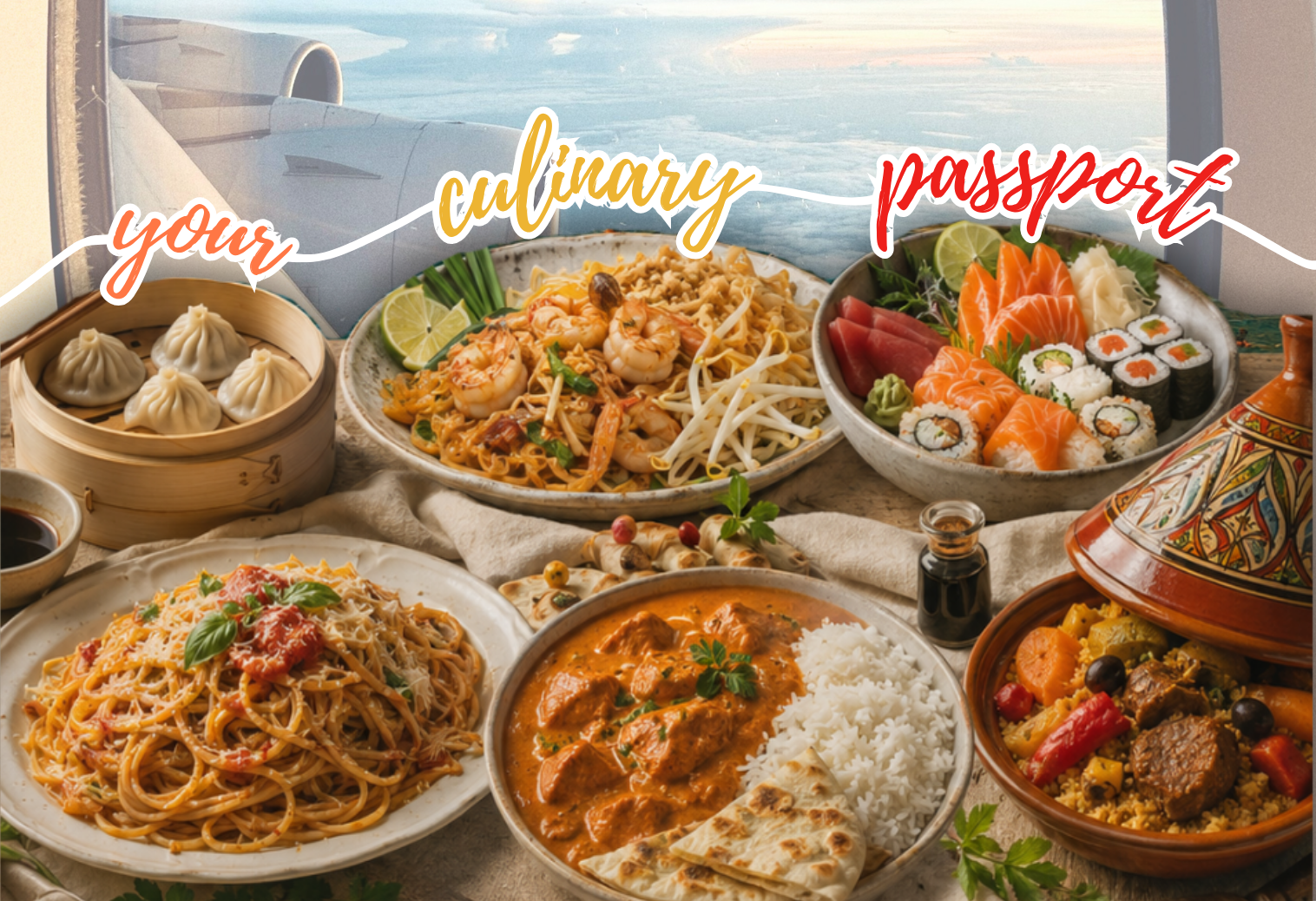
A plate of pad thai in a small Indian city used to raise eyebrows. Not anymore. Somewhere between metro dining, food delivery apps on every phone, and a generation that travels more, even through a screen. Our Indian palates rewrote our own rule. Quietly. Without much fanfare. Holyland's Culinary Passport was built around that shift, the idea that every cuisine carries a story worth tasting, and that India has become one of the most curious food audiences anywhere.
Thailand, Explained in One Bite
Order a bowl of tom yum. Four or five things fight for attention in the same spoonful, sour, salty, sweet, spicy, occasionally bitter, and none of it is an accident. It comes down to the curry paste. Panang, massaman, red, green, each one its own careful ratio of chilli, herb, and spice rather than a single generic "curry" flavour. Different grammar, but same instinct.
Italian food took a quieter route in. It never announced itself, it just became a default dinner favourite. Good spaghetti doesn't ask for much: noodles, a sauce, cheese that melts, like shredded and diced mozzarella, some sliced black olives in brine and a proper extra virgin olive oil. Unglamorous basics, but they're the whole difference between a plate that feels like a restaurant and one that feels like a compromise.
China Never Really Arrived. It Was Already Here.
Hakka noodles, chilli chicken. They did not come from Beijing, and neither from Sichuan. It grew out of Kolkata's old Chinese settlements decades ago, an Indian invention wearing a borrowed name, built on dried noodles, and a sauce blend most kitchens now buy ready-made. Two different cuisines. One label, doing double duty since before most of us were born.
Mexico showed up louder, and later in the 2000s. Tacos, burritos, wraps, spread fast through cafes and cloud kitchens over the last decade. What surprises most first-time diners is that so much of Mexican-style eating in India rides on one unglamorous commonly available product. The tortilla, what we call roti. Whole wheat atta, eggless, built perfectly for any high-volume kitchen and for home kitchens.
Where the Lines Blur
Spaghetti tossed with tandoori paneer. Pizza with butter chicken sauce. A curry paste is doing double duty in a bowl that isn't quite Thai and isn't quite Indian and doesn't much care which box it fits. It's not dilution, it's proof that India can borrow an idea from somewhere else and seamlessly make it it’s own.
Behind Every Plate, a Supply Chain
None of this reaches a table without a network built to carry it, long before any menu gets printed. Holyland Group, through Holyland Marketing Pvt Ltd, works as one of India's best food distribution companies, moving the ingredients under its flagship brand Golden Crown that most diners never think twice about. The cheese, the curry paste, and the pasta. Its reach spans processed food manufacturers and agro-processing partners across the country, positioning it among India's premium food suppliers to restaurants, hotels, and commercial kitchens that need consistency more than novelty. Culinary Passport isn't just a tagline, It's the reason a customer in Jaipur can taste Bangkok, and a kitchen in Pune can plate Rome, without ever leaving India.
Featured Articles
North Indian
 Back
Back