

 +91-11-41255444
 info@holylandgroup.com
Blog
Dark Soy Sauce vs Light Soy Sauce: Differences, Uses and Foodservice Applications
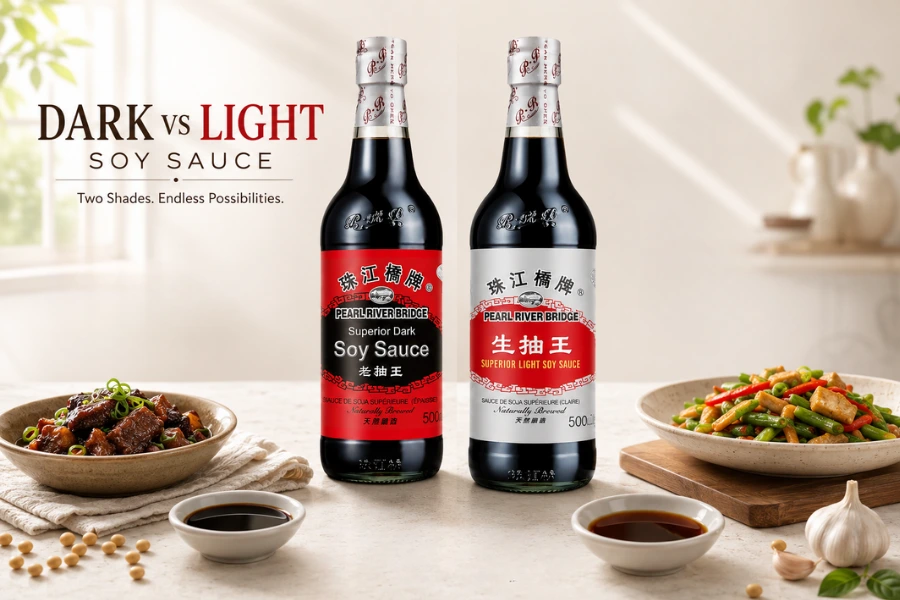
Dark Soy Sauce vs Light Soy Sauce
Introduction — Why the Difference Between Dark and Light Soy Sauce Matters
Walk into any commercial kitchen running Asian cuisine, and you'll find at least two bottles of soy sauce on the shelf — not one. Dark soy sauce and light soy sauce are not interchangeable, and using the wrong one can throw off colour, salt balance, and the overall character of a dish.
For chefs and kitchen managers, understanding the difference between dark and light soy sauce is the kind of detail that separates a dish that "tastes right" from one that misses the mark — especially when consistency matters across every plate leaving the kitchen.
What Is Dark Soy Sauce?
Dark soy sauce is thicker, deeper in colour, and less salty than its lighter counterpart. It's typically aged longer and sometimes blended with molasses or caramel, giving it a near-black hue and a slightly sweet, rounded flavour.
In the kitchen, it's used less for seasoning and more for what it does visually to a dish — coating ingredients, adding a glossy sheen, and deepening the colour of stir-fries, braises, and marinades without overwhelming the dish with salt.
What Is Light Soy Sauce?
Light soy sauce is the more common, everyday variety — thinner, lighter in colour, and noticeably saltier. This is the soy sauce most people picture when they think "soy sauce," usually the one placed on the table for dipping or drizzling.
Its role is primarily about flavour. Light soy sauce carries the umami and savoury backbone of a dish without altering its colour, making it the default choice for seasoning soups, noodles, and quick stir-fries.
Dark Soy Sauce vs Light Soy Sauce: Key Differences
The clearest way to separate the two is by what each one is actually doing in a dish — one is a seasoning agent, the other is closer to a finishing or colouring agent.
|
Feature |
Dark Soy Sauce |
Light Soy Sauce |
|
Colour |
Darker and deeper |
Lighter |
|
Flavour role |
Adds depth, colour and richness |
Primarily seasoning and flavour |
|
Typical applications |
Stir-fries, marinades and sauces |
Noodles, soups, stir-fries and seasoning |
|
Foodservice role |
Useful when colour and depth matter |
Useful for everyday seasoning and flavouring |
When Should You Use Dark Soy Sauce?
Reach for dark soy sauce when a dish needs visual richness as much as flavour — braised meats, glazed vegetables, fried rice with that classic golden-brown tint, and grilling marinades. Because it's less salty per spoonful, it gives cooks more room to build colour without oversalting the final dish.
When Should You Use Light Soy Sauce?
Light soy sauce is the workhorse for everyday seasoning — a quick vegetable stir-fry, a bowl of noodle soup, or a dipping sauce where you want clean, salty umami without changing the dish's appearance. If a recipe simply says "soy sauce" with no further specification, it's almost always light soy sauce.
Dark vs Light Soy Sauce in Foodservice Kitchens
For restaurants, hotels, cafés, and commercial kitchens, the distinction is operational, not academic. A kitchen running Pan-Asian or Chinese-inspired dishes typically needs both stocked separately, because using one in place of the other changes the dish enough that regular customers notice.
Consistency is the real driver. A chain restaurant plating the same fried rice dish across five cities needs the same colour and saltiness every time — which means standardising on specific dark and light soy sauce products rather than treating "soy sauce" as one interchangeable line item.
How to Choose the Right Soy Sauce for Your Kitchen
When selecting soy sauce for a commercial kitchen, a few practical factors matter more than brand loyalty alone:
- Recipe requirements — does the dish need colour, saltiness, or both?
- Desired flavour intensity — lighter dishes call for light soy sauce; richer, glazed dishes call for dark.
- Consistency — thicker dark soy sauce behaves differently in a wok than thinner light soy sauce, affecting how sauces reduce and coat ingredients.
- Pack size — high-volume kitchens need bulk formats that hold flavour consistently across large batches.
Getting this right at sourcing saves a lot of trial and error on the line.
Conclusion
Dark and light soy sauce aren't competing products — they're two different tools doing different jobs. Dark soy sauce brings colour and depth; light soy sauce brings everyday seasoning and saltiness. Most Asian-leaning menus, from a neighbourhood café to a full-scale hotel kitchen, need both stocked side by side.
For kitchens looking to standardise on consistent, foodservice-grade soy sauce, Holyland's imported gourmet sauce range is built for exactly this kind of reliability — the same colour, the same flavour, batch after batch.
FAQs
What is the difference between dark soy sauce and light soy sauce?
Dark soy sauce is thicker, less salty, and adds colour and depth. Light soy sauce is thinner, saltier, and used primarily for everyday seasoning.
Can I use dark soy sauce instead of light soy sauce?
Not directly — dark soy sauce is less salty and much darker, so substituting it changes both the colour and seasoning balance of a dish.
What is dark soy sauce used for?
Braises, marinades, and stir-fries where colour and richness matter, such as fried rice or glazed meats.
What is light soy sauce used for?
Seasoning soups, noodles, stir-fries, and dipping sauces where flavour matters more than colour.
Which soy sauce is better for restaurants?
Neither is universally "better" — most foodservice kitchens running Asian cuisine need both for different dishes.
Can dark and light soy sauce be used together?
Yes. Many recipes use both — light for seasoning, dark for colour — to balance flavour and appearance in one dish
Featured Articles
North Indian
 Back
Back